
The Price Is Wrong
Everyone has an opinion about restaurant prices. Almost nobody knows how they're actually set.

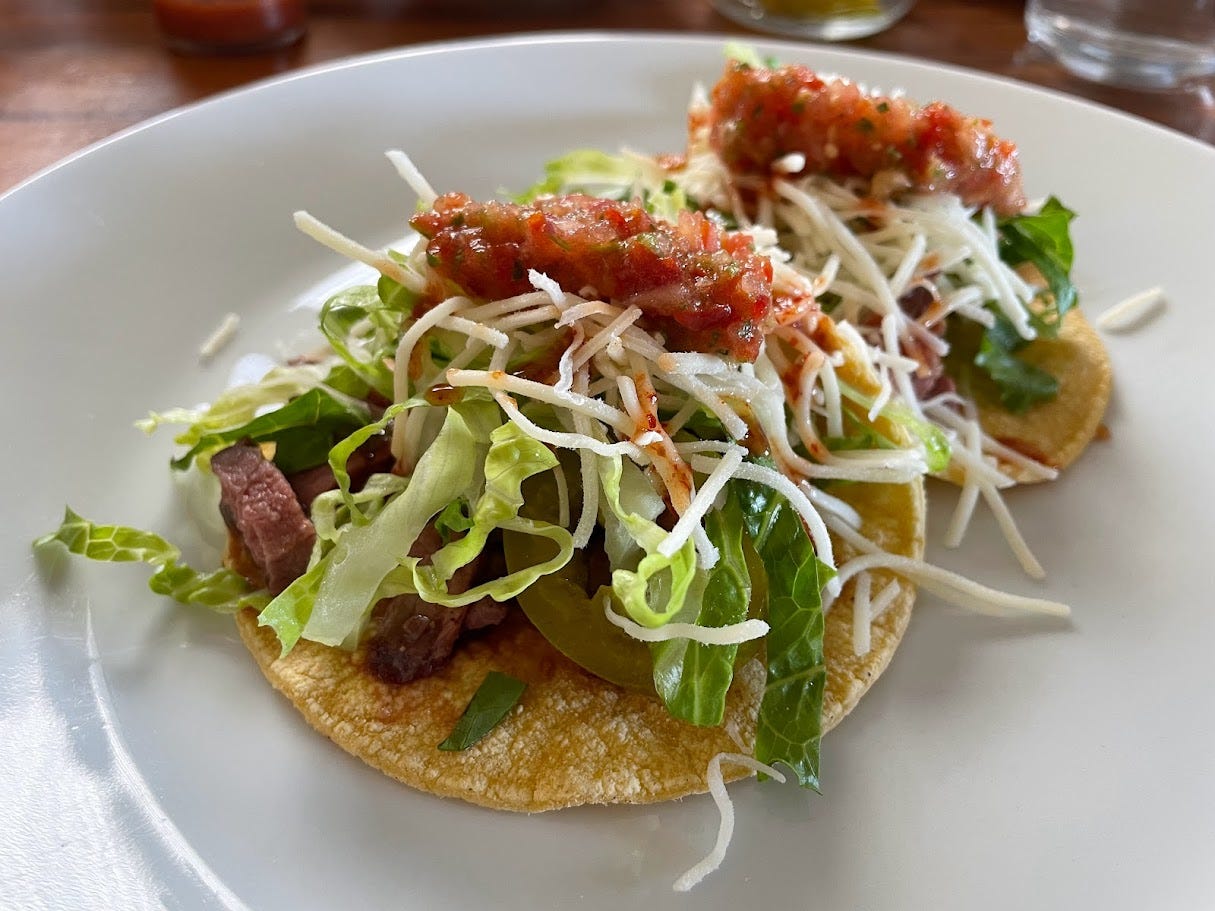
$18 for Two Tacos
I took my kids out for tacos last week.
Nothing fancy, a neighborhood taqueria we’ve been going to for years. The kind of place where the chips are always warm, the salsas have kick, and you don’t think twice about walking in on a Tuesday night.
Except this time, I thought twice.
Two taco plates with rice and beans, a quesadilla, three drinks, and a side of guac. $62 before tip. I sat there for a second and did what I always do. What every restaurant owner does when they eat out. I reverse-engineered the check.
The taco plate was $18. That’s up from $15 a year ago. And I’ll admit: even with 25 years of operating restaurants and knowing exactly what protein, tortillas, labor, and rent cost right now, there was a moment where my diner brain said, “Eighteen bucks for two tacos?”
Then my operator brain kicked in.
And that’s the tension I want to talk about. Because it’s the same tension playing out in every restaurant in America right now, and most people are only hearing one side of it.
The Headlines Aren’t Wrong, But They’re Not the Whole Story
Here’s what the headlines say: restaurants are too expensive.
And honestly? They’re not wrong.
A recent report found that 68% of consumers are cutting back on dining out this year. People are skipping the second drink. Splitting desserts. Trimming add-ons just to keep the check manageable. The $20 side dish has become a psychological line in the sand, and a lot of guests are quietly deciding to eat at home instead of crossing it.
I get it. As a diner, I feel it too.
But here’s what those headlines never tell you:
Most restaurant owners have no idea if their menu prices are right.
Not “right” as in fair to the guest, though that matters. I mean right as in: Do these prices actually cover what it costs to put this plate on the table and keep the lights on?
The answer, more often than not, is no.
Priced by Feel
I work with independent restaurant operators every week. I look at their P&Ls. I look at their menus. And the pattern is almost always the same.
Prices were set by feel.
The owner opened the restaurant, looked at what the competition charged, added a buck or two, and called it a menu. Maybe they adjusted once or twice when a distributor raised prices. Maybe they didn’t, because raising prices felt risky, like they’d lose the regulars.
So instead of pricing strategically, they absorbed the hit. They thinned out portions. They cut a prep cook. They stopped ordering the good olive oil.
And now they’re doing $1.5 million a year in revenue and taking home less than a manager at a corporate chain.
That’s not a pricing strategy. That’s a slow bleed.
Your Best Seller Might Be Your Worst Earner
Here’s what most people don’t realize about menu pricing, including a lot of operators:
Your best-selling item might be your worst earner.
I recently sat down with an operator who runs a fast-casual spot doing solid volume. Breakfast sandwiches flying out the window. Lines on Saturday morning. By every visible measure, the place was crushing it.
Then we looked at the actual food cost on his most popular items.
One modifier, a simple add-on that guests chose constantly, was costing him more than he charged for it. Every time a customer added it, he lost money. Hundreds of times a week.
A menu item in another category was running a 72% food cost. For context, a well-run restaurant targets 28–32%. This item was underwater by 40 points, and it had been on the menu for years.
Nobody noticed because nobody looked.
That’s not a pricing problem. That’s a knowing-your-numbers problem. And it’s the most common problem in independent restaurants today.
The Fix Is a Scalpel, Not a Sledgehammer
The fix isn’t what most people think.
It’s not “raise all your prices 15%.” That’s lazy, and guests will punish you for it. They can feel a blanket increase. It reads as greedy, even when it’s desperate.
The fix is surgical.
It starts with knowing what every item on your menu actually costs to make, not what you think it costs, not what it cost two years ago, but what it costs today. Then you make strategic moves:
Reprice the items that are bleeding you. That modifier that’s costing more than you charge? Fix it tomorrow. That’s not a price increase. That’s correcting a mistake.
Protect your winners. Your highest-selling, highest-margin items are your engine. Don’t touch the price. Invest in making them more visible. Better menu placement. Server training on suggestive selling. Feature them on your socials.
Cut what’s not working. That item at the bottom of the menu that three people order per week and runs a 55% food cost? It’s not a menu item. It’s a liability. Let it go.
Reposition before you reprice. Sometimes the move isn’t changing the number. It’s changing the perceived value. A better description. A sharper presentation. Bundling it differently.
When you do this work, when you actually engineer your menu instead of guessing, you can often improve your margins without raising a single price. And when you do raise a price, it’s a $1 move on one item, not a $3 move across the board. Guests barely notice. Your P&L notices immediately.
Both Sides of the Table
Here’s the thing I want both sides of the table to understand.
If you’re a diner: The next time you see a price go up a dollar or two at your favorite local spot, know that an owner probably lost sleep over that decision. They ran the numbers. They weighed losing you against losing the business. That $1 increase might be the difference between staying open and not. Independent restaurants aren’t making what you think they’re making. The average net margin is somewhere around 5%. Your favorite neighborhood place is probably running on fumes and pride.
If you’re an operator: Stop guessing. Your menu is the single most important financial document in your business, more important than your lease, your loan, or your labor schedule. And most of you haven’t looked at it with a calculator in hand since you opened.
The price isn’t wrong because it’s too high or too low.
The price is wrong because nobody did the math.
A Dollar Thirty-Five
That taco plate I had last Tuesday? At $18, the operator is probably running it at a 30% food cost, about $5.40 in ingredients. After labor, rent, insurance, and everything else, they’re netting maybe $1.35 on that plate.
$1.35
Still think it’s too expensive?